Puppy Socialisation: What It Really Means
Puppy Socialisation: What It Really Means
What Is Puppy Socialisation?
Puppy socialisation is one of the most important aspects of early puppy development.
True socialisation is not simply allowing puppies to meet as many dogs and people as possible.
Effective socialisation means helping puppies develop positive, safe, and neutral experiences with the world around them.
The goal is to create puppies who feel:
Confident
Calm
Safe
Emotionally resilient
The Critical Socialisation Period
Puppies experience an important developmental stage between approximately 3–14 weeks of age.
During this period, puppies are especially sensitive to learning about:
People
Dogs
Sounds
Surfaces
Handling
Environments
Traffic
Household activities
Positive experiences during this stage can significantly influence future behaviour.
Why Flooding Can Be Harmful
Many owners mistakenly believe socialisation means overwhelming puppies with exposure.
Too much too soon can create:
Fear
Anxiety
Over-arousal
Reactivity
Avoidance behaviours
Force-free puppy training focuses on controlled, positive exposure at the puppy’s pace.
What Good Puppy Socialisation Looks Like
Healthy socialisation includes:
Calm observation
Choice and control
Positive associations
Appropriate distance
Gradual exposure
Safe interactions
Puppies do not need to greet every dog or person they see.
Learning calm neutrality is often more valuable.
Important Socialisation Experiences
People
Expose puppies to:
Different ages
Clothing styles
Mobility aids
Hats
Umbrellas
Calm handling
Always ensure interactions remain positive and optional.
Sounds
Introduce:
Traffic sounds
Household noises
Fireworks recordings
Thunder sounds
Busy environments
Pair sounds with food and positive experiences.
Environments
Allow puppies to safely experience:
Different surfaces
Urban environments
Rural walks
Car travel
Veterinary clinics
Grooming environments
Puppy Socialisation and Other Dogs
Not all dog interactions are beneficial.
Good socialisation focuses on:
Calm dogs
Appropriate play
Positive experiences
Controlled introductions
Avoid overwhelming puppy free-for-all environments.
Quality matters more than quantity.
Signs Your Puppy Is Overwhelmed
Watch for:
Lip licking
Yawning
Avoidance
Hiding
Freezing
Barking
Excessive excitement
If puppies become overwhelmed, increase distance and reduce pressure.
The Role of Puppy Classes
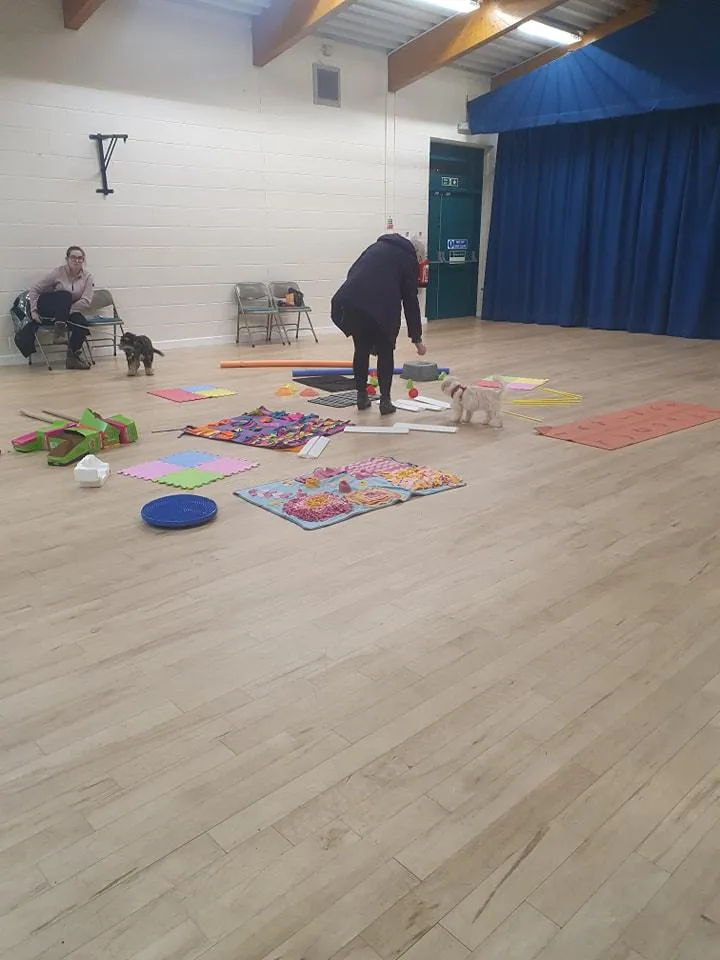
Professional force-free puppy classes provide structured socialisation opportunities alongside:
Life skills
Recall training
Lead walking
Calmness training
Focus exercises
Safe, controlled classes help puppies build confidence without becoming overwhelmed.
Are you based in Northumberland? Online tips are a great start, but hands-on feedback stops puppy frustrations much faster. Join our Perfect Puppy Classes at Acklington Village Hall
https://college4canines.co.uk/perfect-puppy-classes
Final Thoughts
Puppy socialisation is about creating positive emotional experiences — not simply exposing puppies to everything.
Force-free puppy training helps puppies develop confidence, resilience, and appropriate social skills through safe, controlled, positive experiences.
Thoughtful early socialisation can significantly reduce the risk of future fear, anxiety, and reactivity.
Author
Written by Denise Devereux, BSc (Hons) Canine Behaviour. Denise is an accredited force-free behaviourist currently completing her MSc in Clinical Animal Behaviour at the University of Edinburgh
https://college4canines.co.uk/about-us
©️College 4 Canines